
- We are scientists, too!

Sometimes travel is mandated, sometimes it is endured, but often it is undertaken for the sheer pleasure of seeing new places or visiting old friends.
I recently read an essay, Rite of Passage, in the current issue of the magazine 'Orion'. Writer and climate change activist Mike Tidwell takes his son to camp in a place which is part of what I used to call 'Home': Big Bend National Park. Mike relates to his son many the same thoughts that haunt me as a member of society and as a concerned human being.
Here's what bothers me about people. Everyone (almost everyone) is so fixated on their own little dramas, creating and perpetuating them to the point of ad nauseum, that they lose sight of the bigger picture out here. Of which all lived places are a part. Or they don't care. Even I fell victim to this. It took stepping back to see how we really are. Were just as selfish and destructive as those we blame everything on.
But people of any community can make a difference.
If we want to.
I know I am probably stepping on toes with this comment, but I also blame myself. And this is one reason of several I've felt the need to remove myself from just one location, to be able to step away and look back. And at least offer my time and expertise to help in any way I can, no matter how small it is. Because my conscience just won't let me not do so.
“So this whole thing—Katrina, Sandy, drought—is about Exxon making slightly higher profits for a few more years until god knows what happens to the climate?”
“Yes.”
“Dad, how are you losing this debate?”
“We’re not losing it,” I say. “We’re just not winning it fast enough.”
“What’s it going to take?” he asks. “Just what in the world is it going to take?”
“I don’t know,” I tell him. “I don’t know.” I keep saying it. Until I stop saying it."
And I hear my own voice echoing the same..........


For the past six years, our current global trends have depressed me. The rapid loss of natural diversity and the spiraling decline in connections between humans and their environment, the lack of compassion between people themselves and with other creatures, a prevailing disconnect and abuse of power by public officials and policies. The growing corporatization of higher education and science while sacrificing quality teaching and research was the final clincher.
I fled from the Empire. I left academia to fight at the grassroots level.To lend a voice to those creatures whose plights are disregarded by humans. And to help people become aware and more appreciative of the intrinsic and moral values in their environments. My mission is to help people better understand their environment and to establish meaningful connections with nature.
My life is very now different from the last several decades. In some sense, it is reminiscent of my years in Maine when connections with the land and wildlife were the strongest. Shedding most of the personal burdens that anchored me like a chain the past ten years has simplified and lightened my life. The sacrifice of personal possessions and commitments for a nomadic and simpler lifestyle suits me well. Indeed, I haven't been this happy in almost 10 years.
Now I travel around the country to live and work at the national and state refuges. I share my interests and knowledge of natural and cultural history with visitors. I also help the ecologists and biologists with my varied skills in the life sciences. My reward is spending time with the wildlife and visiting natural areas, and sharing many wonders of natural science with visitors.
Traveling offers opportunities to experience not only a large diversity of wildlife, but also meet a wide diverse sampling of our own species. What amazes me is the people that come to the refuges from all over the world. I've met people from Canada, Argentina, Switzerland, Netherlands, Israel, England, Scotland, South Africa, Italy, Australia, and France.
Additionally, people from my past have resurfaced in many places, such as a woman from my hometown 44 years ago and a former colleague from 17 years ago. I have also had the opportunity to reconnect with old friends and spend time with family members.
 The most precious experiences are those gained from immersing myself in the surrounding wild nature of life. I had an eye-to-eye encounter with a juvenile bald eagle twelve feet from
me, chats with ravens, songbirds sit on my shoulder, frequent sightings of a local cougar, delight at the play of an otter family, and watching behavior of many birds as they live out their lives. What they share with me, I try to share with others.
Opportunities to spend time in fantastic wild areas frequently fills my free time. Camping for days on Steens Mountain in eastern Oregon, hiking miles in the painted deserts of Oregon and Arizona, spending two nights at the base of towering cliff and alkaline lake with no humans within miles, and smelling the musky scent at my feet of bighorn sheep was I stood on a rim gazing thousands of feet below. I gladly trade the conveniences of cafes and supermarkets for these experiences.
The world is fantastic, marvelous and beautiful out there. I am glad to break out of the small, trivial and many times petty world that was chocking and suffocating me.
This is my new life as a nomad. And this is my new retirement 'career': to help foster and nurture connections between people and wildlife, to rejuvenate compassion. My optimism is encouraged by the dedication and commitment of those people working in wildlife services, especially with dwindling budgets. I am glad to see the growing number of academic and field ecologists and biologists finally speak out in kind. I hope this is a growing strength. We need more on the side of nature.
And for me, e non ho amato mai tanto la vita.
Labels: Adventures, essays, Traveling, wildlife refuges
This tickled old chimes in my memory, way down in the dungeons of the abyss. Long ago, covered with dangling cobwebs, smelling of must and muffled, an echo quivered. "I know you."
Yes. That was it. From a book that I loved. Ideas that grew and formed my outlook on life.
Forty-five years ago I read a book for my English class, Canticle for Leibowitz, by Walter Miller. I had to write a book report on it. I got carried away and wrote 5 or 6 pages worth of meandering thematic thoughts. Science, philosophy, human nature, theology, history, society and culture.
The first three pages of my graded paper were marked with some red lines and scribbles correcting some grammar or sentence structure. Then a sentence in red pencil in the left margin: "I give up. I have to read this book. What do you do on weekends? Tell me you at least go out and play."
I did. I still do. But reading and books have been more than just words on paper, or on a screen. They are the voices of thousands of souls. Human, non-human, physical, spiritual, past, present, future, fantastic, mythical, astronomical, microscopic, universal.
A thread ties us, everything, together. In and out, around, under and over. When I see a hill, I see a mountain that was, the rocks that it begat, and the sand that it eventually becomes. I see and smell the musty soil that it feeds, the plants that it nourishes, the animals that feed on them. I hear the rain and lightening which hastens its transitions and feel the hooves and claws that walk on it. And me, you, we, are no different than this mountain. We came, we are, we were.
We as humans are terraforming this earth. This mountain is now a hill and its soil is being consumed. We, too, will pass. And it will probably start all over again. Just like it has before. Perhaps this is what Miller had in mind. And I wonder if this is what dove him to suicide.
It's been many decades since I read the book. He wrote a sequel shortly before his death in 1997. Perhaps I need to read that one, too. After all, it was Miller, Steinbeck, Tolstoy, Asimov, Moorcock, Kipling, London, Poe, and even Robert E. Howard -all authors of my youth- that spoke to me and inspired me to write. And to think.
 A Tale of Two Parks
Dear Ed Abbey,
I want to introduce you to a park I think you will approve of. It is near the national park where many times you hiked, rafted, camped and navigated its rough roads. You drove through the new park several times on your way to Big Bend National Park from Presidio and Lajitis. Although your attention was always drawn to the Chisos volcanic cliffs and peaks in the distance, “like a castled fortification of Wagnerian gods,” you missed equally if lesser-known wonders on both sides of the highway you traveled.
Although I’ve been writing to you off and on over the last two years, allow me to diverge from that and tell you about an area in Big Bend that you would have enjoyed.
During your first visit to Big Bend National Park in 1952, you may recall your memorable drive along the primitive road, now called River Road, from Castolon to Rio Grande Village. It took two days in your fiancé’s new car, much to her objection, to literally crawl over the fifty miles of boulders, deep ravines, ruts, chuckholes, thorns, and sandy washes. After springing both doors, bending the tie-rod, and burning the clutch, the car barely rumbled into the village with one flat and shredded tire.
Despite wrecking the car and your engagement, the wildness of the park drew you back again and again. Many years later you drove the back country Old Ore Road with friend Jack in an old pickup truck, camping and exploring a beautiful canyon with a winding “gothically crenellated rim” and overhanging walls. The series of tanks filled with water, or tinajas, is now called Ernst Tinaja.
During that same trip with Jack, you both drove Glen Springs, Black Gap and River roads. Despite the posted warnings at the Black Gap cut-off of infrequently patrolled rough terrain, the two of you interpreted the challenge as a ‘must do’. And you did, after removing boulders, beveling cutbanks with a shovel, straddling gullies and you leading the way on foot to guide Jack with hand signals on Black Gap.
Very succinctly, and too close to home for me, your words have stayed with me all these years: “There are things in Texas worse than a mere fifty miles of rock and sand. I’d rather be broke down and lost in the wilds of Big Bend, any day, then wake up some morning in a penthouse suite high above the megalomania of Dallas or Houston.”
Camping for the night on the side of River Road, you pondered the deep gash of Santa Elena canyon and lights of Castolon in the dusk. A supper of tortillas, cheese and refried beans topped with a salute of hot cocoa spiked with Wild Turkey ceremoniously honored the scenery around you and the success of your daunting maneuvers along the back roads.
After another hike, this time the south rim of the Chisos basin, you were sorry to leave. As we all are. You wrote, “We console ourselves, as we always do, with the thought that we’ll be back, someday soon. We will return, someday, and when we do, the gritty splendor and the complicated grandeur of the Big Bend will still be here. Waiting for us. Isn’t that what we always think as we hurry on, rushing toward the inane infinity of our unnamable desires?” Yes, that is what we always think and say to ourselves.
I have been on those same roads and hiking trails, Ed. They’ve smitten me, too. Some of us are satisfied with one visit. Others, like you and I, are never satisfied unless we can spend eternity there. But I know, and you knew, we can’t.
That may have been possible many decades ago in our history, and many people did live in these places. But expanding American imperialism and a growing capitalistic world changed all that as the 20th century marched forward with technological, medical, social, ideological, and political innovations. Wilderness doesn’t exist anymore. No land remains untouched by humans.
Our national park system strives to preserve or conserve pockets of remaining ‘wilderness’ and representations of our American heritage. You have written in many forms –prose, reviews, fiction, letters, and poetry- expressing disgust and anger at turning those motives into industrial tourism -building ‘amusement parks’ and ‘Disneylands’. Development in the form of modern lodges, consumption stores, large campgrounds that have become little suburban villages, and wide ribbons of pavement are diametrically opposed to the concept of preserving wild places. They also enable isolation of visitors from that which they come to visit.
In your book Desert Solitaire you wrote, “…the chief victims of the system are the motorized tourists. They are being robbed and robbing themselves. So long as they are unwilling to crawl out of their cars they will not discover the treasures of the national parks and will never escape the stress and turmoil of the urban-suburban complexes which they had hoped, presumably, to leave behind for a while." Sadly I see this time and time again during my visits to all parks. But can this be changed?
Walking and hiking the parks offers visitors more intimate and personal contact with the environment: land forms, vegetation, weather, life and death. This enables more awareness, self-sufficiency and satisfaction from their experiences. Despite justification for your proposal presented in Desert Solitaire (and other writings) to ban all vehicles from parks, forcing people to walk as their only option inside the parks is idealistic and impractical. As much as my deepest sentiments run parallel with yours, the reality is that this will not happen. However, these issues and the park systems do need to find a compromise. Otherwise our parks will be nothing more than NY Central Park clones.
I engage you on this topic in depth in my long letter to you and will avoid doing so in great detail here. In this short letter, I want to tell you about a state park in the Big Bend region that strives for such a compromise.
Just north of Hwy 170, which you drove to get to the national park, and in between the small towns of Presidio and Lajitis, sits the relatively new Texas Big Bend Ranch State Park. It is the largest -300,000 acres- and most wild remote park in the state.
Formerly, the park was two ranches: the Fresno and Big Bend Ranches. It includes high and low desert, two mountain ranges with extinct volcanoes, towering rocks and waterfalls, canyons and springs, ancient campsites, shelters and rock art, and 23 miles of frontage on the Rio Grande. You would especially like the slot canyon, Closed Canyon, with its sheer vertical walls of igneous rock. The jewel of the park is an ancient volcanic laccolith (with a caldera) 9 miles in diameter and rimmed by many twisted, curving rocky ridges.
Although goats, sheep and cattle once grazed the area, only a small herd of the historic Spanish Longhorn cattle remain as domestic stock. Otherwise the area is home to a variety of Chihuahuan Desert wildlife: bats, snakes, lizards, tarantulas, birds, and mammals, such as coyote, cougar, black bear, coati, mule deer, javalina, and vegetation of cacti and other desert species. This is their home more than it is our place.
Except for two visitors’ centers on the highway, there are no stores in the main park. Unlike the national park that unfortunately bulldozed almost all the ruins and remains of ranch houses, adobes and jacals where people once lived, they remain in the state park. Face it, Ed; people lived here in this harsh, arid, unforgiving desert and mountains, subsisting the best they could on what the desert would allow. This land is their legacy, too. This area is rich in cultural diversity, probably more so than your beloved Utah desert.
The complex of buildings that formed the heart of the former ranch provides two types of accommodations: the ranch house and bunkhouse. Built in 1908 and renovated in the ‘40’s, the house with three bedrooms offers most of the amenities from outside the park. The bunkhouse is just that: two quarters with bunks and a central kitchen with dining room. Far from the more modern and luxurious lodge complex in the national park’s Chisos Basin, the state park’s offers rustic and quiet charm in a less developed environment.
You would be pleased to know, Ed, that there is no pavement in the park except for the highway that runs along the river frontage. A 36-mile gravel road leads through hilly terrain into the heart of the park. It ends at the original ranch complex and ranger station. A network of trails provides access and begs exploration by foot, mountain bike and horse, and camping in the backcountry can be almost anywhere. A limited network of primitive roads enable (barely) navigation by four-wheeled drive vehicles and soon, dirt-bikes.
Now, Ed, I know how you feel about motorized vehicles in parks, and your proposal to ban them from parks. But do you remember when you drove those backcountry roads in Big Bend National Park? Do you recall the thrill of the challenge and adventure? You drove those roads despite Ranger warnings and signs. You even moved the signs that said “Road Closed” and “No Road” and went through anyway. Can you remember those nights you camped by the sides of those roads, reveling in the solitude and remoteness? Ed, do you really think that you are the only one entitled to that?
I ride a street-legal dirt-bike, Ed, on those same roads. Like you, I stop and marvel at the silence, the beauty, the raw emptiness and wish that I could stay the tide of development, encroachment, and exploitation there and in places left that still hold against our so-called 'civilized' intrusion in the name of 'progress'. Sometimes the magnificence of it all fills and chokes me marvel and awe, with a humble connection that most people in urban messes have no inkling of. Pavement and concrete can’t impart that. And sometimes, like you, I’m angry and want to keep it all to myself as if I can protect it. But I can’t. Neither could you.
Together, people like us might be able to bring awareness to those that live in the ever-expanding urban madness, show them what wilderness once was, what it means to us, and what we can do to preserve what we have left. We need you, Ed Abbey. Even in your grave, you are still with us.
I think this is happening. This new state park is a compromise between preservation of wilderness and access for people to enjoy a wilderness experience. To learn about what it means to be remote, be self-responsible and sufficient, to appreciate the dark blanket of the night spattered with twinkling stars and cherish the sound of the coyote and the hiss of the wind. They have the opportunity to learn what time, and timelessness, really is. And they also have the chance to learn about themselves.
The state park doesn’t have the mystifying giant mountains that float in the sky, or awe-inspiring badlands, or the grand madam Santa Elena canyon. But it does have it’s own unique gems. And it is more remote and primitive than the national park. It truly is a preservation of legacies of the land and those that lived and died for it. And everyone can share it.
Ed, I think that the following words you wrote in Desert Solitaire ring true for everyone as we lose more and more of our precious natural heritage around the world. "Wilderness is not a luxury but a necessity of the human spirit, and as vital to our lives as water and good bread. A civilization which destroys what little remains of the wild, the spare, the original, is cutting itself off from its origins and betraying the principle of civilization itself."
Yes, Ed. We need wilderness to remind us of what it is to be human.
With complete sincerity,
Elzi


Often this has arisen in personal discussions, more so recently. 'Home' can mean many things to different people. Home may be where we grew up, where our families are, where we live, a place where we lived and felt loved or safe, a place where we are surrounded by friends and the familiar.
'Home' can also be anywhere, any place, at different times.
Just the other day I read a story written by a woman, Asha Patel, staying in Tokyo. Frustrated with a strange and impenetrable culture, inability to communicate and homesickness, she fled to a forest along the ocean. Where she did not find the solitude and solace she hoped for, and returned to the city to discover a revelation:
"....I realized my struggle to conform was futile, for it was from within me that a sense of home, a sense of belonging was to be found..... And so it was that I finally found home. Not in the familiar confines of my own country, but a deeper, more definite sense of belonging that is available when one opens her heart to the infinite possibility that life is."
Later she writes, "And so it is that the ebb of life continues to flow, and beautifully illustrates that I have evolved, transformed by that wonderful gift we call travel."
Franz Fanon wrote, "In the world through which I travel, I am endlessly recreating myself." There is something about traveling: taking your soul for a ride, different places and people that are unfamiliar. It allows you to evolve, grow and become the person that you are inside.
"Home is where you hang your hat" or your helmet. It is not a place, but a state of mind. Inside and outside, when the two meld in harmony. It is a connection felt inside and outside of you.
Inside yourself, you will find 'home.'
Labels: essays
A theme of introspection pops up through the years like a fish jumping above the water surface for bugs: permanence. Nothing is permanent or static. Everything is dynamic and changing; not always for the better, but nevertheless, everything is on the move.
The master of deception is time. We change, from the moment of birth to the second of our death. Everything around us changes. I observed changes on my two-week road trip last year that could boggle the mind, if it only was aware of them. All the mountain passes were rolling green stretches at the beginning of my road trip west; on the way back they were splashed with rust, muted reds, bright yellows, and even the white of snow. All within seven to ten days. Like changing clothes, the mountains disrobed their green growth for a gown of golden, red and brown patterns.
Everywhere I travel I try to imagine what the landscape and life was like before the moment my eyes beheld it. The epitome of time and change was in the canyons and desert. Thousands of years of weathering by water, wind, freezing and blistering heat painted and carved those landscapes. Yet the process is so slow most people aren't aware of these changes as they gaze transfixed by the beauty and silence of what lies before them. What we observe is one point in a seemingly infinite timeline; infinite to us because we can not know the beginning or the end. All we are concerned with is 'now'.
The slow rate of change in the canyonlands is contrasted by our bustling impatience as we speed through our lives, always hurrying to our destination by the easiest and quickest way possible. Open the door of the SUV or RV, snap a picture and move on quickly to the next scene. Our entire lives are like a quick tour, barely scratching the surface to see what lies beneath, afraid to explore and watch as life unfolds around us. Most of us have no idea of what we miss, and thus no basis for appreciation of what or who surrounds us.
In this hustle through life we don't really live it. We just skim the surface like a sharp stone flung over the water. And once on the other side of the pond, we realize we never really saw the world that lies beneath. But by then it's too late.
"You don't know what you've got 'till it's gone. They paved Paradise and put up a parking lot."Looking out over the canyons and desert everything may look the same. Standing on the edge of a canyon for days, years, decades and it may always appear the same. We may notice obvious changes: shadows of clouds creeping across the surface, blazing sunsets, contrasting shadows against the brilliant colors in the last light of the day, the parched ground of summer and its rejuvenation after a hard rain, spring flowers after the winter blanket of snow. But we will not see all these forces carve their presence in the earth as they crawl through time. What may seem permanent for us is never real; everything changes, but at different rates.
Many clocks exist in this world but in our realities they are not all the same.
Living in one place for a long duration alters our perception of time and change. We become oblivious to the crawl of time and changes are imperceptible. Eventually we become desensitized to everything around us and the routines of life drive us like cruise control on an automobile. We may wake up one morning and wonder where all those years went when today seems like all the other days so many years ago.
Some people barely move beyond their birthplace, with the same friends, family and townsfolk for most of their lives. Others creep across the continent or globe, crossing paths of others for a moment, a day or a few years.
Yet we all have landmarks in time, in our lives. They may be places or people we fondly remember, or moments that left their imprint upon us and which we may never forget. We gather these all into a handbasket and carry them with us, sometimes reaching in and holding them close to us, sometimes wanting to toss others out but they won't budge.
We change, they may change. Some paths of change never veer far from each other. Like the cycle of seasons in the canyons and deserts, layers of change marching to different clocks, some slower and some faster. People pass through our lives on a daily or yearly basis; here and gone. Others stay, connected by an invisible umbilical cord and never venture far. Even though they may be hundreds or thousands of miles away.
The only constant in this, our reality, is change. Although change often represents risk, may upset comfort levels, and challenge our beliefs, change is inevitable. Time drives changes in so many layers that circle around and within us, all relative to our mind's eye and our heart, we can't see it all let alone comprehend it. It is the asphalt that paves the paths of our lives. And to continue down the road, we must accept some level of change. Because life is a series of changes, in us, in others around us. Before our time, and after our time.
That won't change.
My friend and I have traversed our roads of many changes: hills and potholes, slippery and bumpy, sleepy straight lines that are gone before we know, and sweet curves into the sunshine or away from the storms. We've changed. And we will continue to change.
But one thing remains the same, standing tall and strong over the test of time: our friendship.
Here's ten years to you, my friend.
Labels: essays
"It is only with the heart that one can see rightly; what is essential is invisible to the eye.""What does your heart tell you?"
- Antoine de Saint-Exupery
I posed this question not too long ago to someone in a state of confusion. Perhaps he was afraid of his heart, or what it told him. I'm not sure he really listened or knows his own heart.
Many people don't.
Emotional intelligence, or intelligence of the heart, is acting with integrated reason and feelings. I see too many people these days who lack this intelligence, and lack heart. Instead of being recognized and understood consciously, emotions are supressed or resisted, giving them subconscious power. They then drive our behavior, and we use our rational intelligence to justify such behavior. Instead of conscious persons who understand why they feel and consequently behave as they do, we have become subconsciously driven and susceptible to cultural conditioning. Our unempathetic and unethical behavior - and the corresponding lies and rationalizations that result - destroy our spiritual integrity.
Two key components are the foundation of emotional intelligence. One is self-awareness. Being aware of an emotion as it happens; realizing the prior ideas, experiences and conceptions that underly an emotional response; being open to intuitive insights; emotional honesty - a developed sense of integrity and authenticity.
The other is emotional maturity. Facing up to fears and anxieties, anger, sadness and discontent and expressing that energy constructively, while retaining spontaneity.
Every day I have conversations with my heart. Sometimes we argue. Other times we sing in synchrony. Any important and significant decision requires that I ask myself "What does my heart tell me?" Sometimes what it reveals hurts my entire body; other times we must compromise or make a truce. But I never ignore what it has to say. Not any more.
During a period in my life it was kept kept in a dark box. It was buried deep in the earth because it began to buckle under the demands and torment of my life around me. I put it in a box and buried it so that I could stand tall and solid like an oak and do what I had to do, no matter how much it hurt. I did what I had to do.
But I had forgotten where I had buried my heart. I could no longer hear it except for faint echoes.
Years later I could hear and smell it but not feel it. Like an old hungry wolf, I went hunting for the bones. I found where the box was buried and dug and dug up the layers of dirt under which it hid. When I found the box, I opened it and there it was. Like old bones that were buried to hide, I took out those bones and played with them, rubbed them all over me, threw them in the air and caught them, danced with them, and sang with them. Then I put them back inside me. All the broken pieces were put together and wrapped with duct tape and it snuggled me inside.
The old weary wolf had found her heart. And it shined brightly.
My path again had heart; intelligent heart.
When I ride my bike, my heart surfaces and rides outside with me. Chains fall away, lids fly off boxes, everything is clearer, sharper and real. Cobwebs are blown away and nagging flies flee. I'm free.
My heart and reason communicate and blend together in harmony. And I often see everything around me differently. Walls tumble and layers melt away. The heart sometimes guarded so tightly rides next to me and relays all it sees to me. And it never lies.
Riding with heart is an unsurpassed freedom . Like the wild wolf running unleashed. I can see into and outside of me, and it all becomes one. After each ride I am enriched.
And never alone.
".....Therefore you must always keep in mind that a path is only a path; if you feel you should not follow it, you must not stay with it under any conditions....
Does this path have a heart? If it does, the path is good; if it doesn't, it is of no use. Both paths lead nowhere; but one has a heart, the other doesn't. One makes for a joyful journey; as long as you follow it, you are one with it. The other will make you curse your life. One makes you strong; the other weakens you."
- Carlos Casteneda
Labels: essays
I was a hermit. No, I didn't have a long beard or wear a loin cloth (hmm... nice idea, though). I lived alone in the Maine woods for many years. They were the happiest years of my life.
I jokingly tell people I was raised in a den of wolves. My family was eccentric and unconventional; my parents were intellectuals and, what was considered in their time, Bohemians (yes, my Dad rode a motorcycle, too; an Indian). I grew up with and around scientists, musicians and artists; my nose in books, playing music or exploring outside in the creeks, woods and meadows alone. So it was no surprise when I fled the suburbs to the Maine woods and built a cabin for myself to live. And learn about myself and my surroundings.
The only modern convenience I had was electricity; I had to have my stereo and music. I heated and cooked with wood, hauled water up a winding gravel drive, grew most of my own food and I had an outhouse. My choice was not so much influenced by the 'Back to Nature' trend of the seventies as it was my own personal choice and need to be alone: when I left home at seventeen, I discovered I was a misfit.
So I went to a place where I could be alone and discover who and what I was. Contemplate my place in everything and what this world really was. I lived alone in the woods for several years, eventually putting myself through university and integrating with the world around me. Now I am comfortable with who and what I am, even though I still don't really 'fit' in the boxes prescribed by our culture and society.
I am my own best friend. Nor am I afraid to be alone. In fact, some times I prefer it, although I socialize just fine.
I'm not a misfit anymore, but people still shake their heads at me. I've discovered few people are comfortable being alone or with themselves as they are. In many indigenous cultures the men and sometimes women were ritually sent out alone to discover themselves and the world around them. If they survived the challenges of being alone, they returned with maturity and self-confidence. They were a complete individual: resourceful, independent and self-responsible rather than one who does not know him or herself, avoids responsibility, always relying on someone else to carry them along in life and searching for self-satisfaction and happiness outside of themselves. We are surrounded by dysfunctional co-dependencies.
This is one of several reasons why riding a motorcycle integrated so smoothly and quickly with my personality. It's solitary. It reminds me of the earlier explorers on their horses braving the unknown. There's little 'unknown' territory out there anymore, but for me every place is worth exploring and can be an adventure. Always something new. And I can choose to ride alone or ride with others. That's what I like; it's what I am.
Now when I look around me I see people dissociated from their environment, always searching for identity, purpose and entertainment. We've become addicted to technology for the sake of providing us with a false interconnectedness and worth. But its never good enough and we move from one to the next. We need more square footage, more powerful vehicles, more water, more food, more TV and media, and more toys.
People don't know who or what they are anymore, so they don't feel comfortable with themselves; they are afraid to be alone. Because they are strangers unto themselves. So we stick to each other like flies to flypaper, cell phones glued to our ears, newest gadgets, buying 'stuff', Bluetooth implanted in our heads, televisions in cars, the Internet in refrigerator doors, and fingers searching daily for updates on YouTube.
We are strangers in a strange land that we made for ourselves.
What happened to going for a walk in the woods? Enjoying a sunset? Smiling at young birds learning to fly? Listening to a water fall? Or the howl of coyotes and hooting of owls in the night? Listening to others, charity, courtesy, compassion, and integrity?
We're killing it all. And losing ourselves in the process.
Nature is something to conquer and mold to suit our own needs, not something to enjoy just for being itself. It was here before we were, but damned if we're going to let it get away with that. We use it up, throw it away and go on to the next untamed piece of earth. Our national parks are no longer virgin sanctuaries appreciated for what they are (or were), but now groaning under the rutting of industrialized tourism. There is nothing pristine, untouched, undamaged by us anymore. And in our greed to satisfy our wants, we are destroying what we need. Nor will we ever be satisfied.
And in our desire to get away from everything around us, we have caused there to be no place to get away to. We are the nemesis of the Midas Touch.
I've lived in or near the cities now for nearly ten years. The bike provides me a way to explore new territories and return to the life and environment that I lived in and loved. In my writings I try to convey what I see, hear and feel. To give others a prospective and sense of what they are missing and losing. To induce, instill, awaken and foster an appreciation for what was, what exists and what they don't see.
It is my penance for returning to the world of my fellow humans, to restore a sense of hope, rather than hopelessness, in myself. To balance the idealist with the cynic. To share the wonder that is out there, if only others would take the time to see. And to see the wonders inside themselves and each other. I write to bring it to them, silent in their ears, but loud in their eyes.
I've made peace with my demons. I don't want to die knowing that I sold out.
And now you know.
Labels: essays
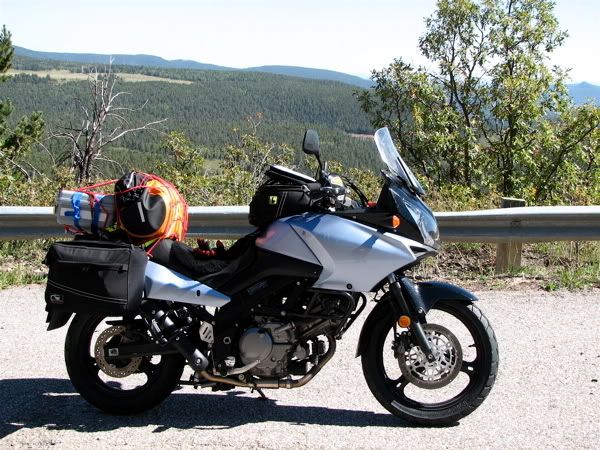
A year ago this coming Sunday, Whee arrived to his new home and rider. Dirk and I picked the bike up in Houston, loading it in the back of my truck and I drove it home.
It was several weeks before the bike was ready to ride; I lowered it by an inch and 1/8. But I still remember that first ride, intended for just 'around the corner' (several miles out here in rural Texas). I ended up coming home several hours later with 125 miles on it.
I remember riding down I-20 just loving the feel of it, how it handled, it's quickness........and emitting "Wheeeeeeeeeee!!!!!!!!!!!" inside my helmet. With a big giant grin.
It was love at first ride. Whee and I are now the best of friends and we've ridden slightly over 18,000 miles since then.
"Travels with Whee. "
You would understand, Mr. Steinbeck.

Labels: essays
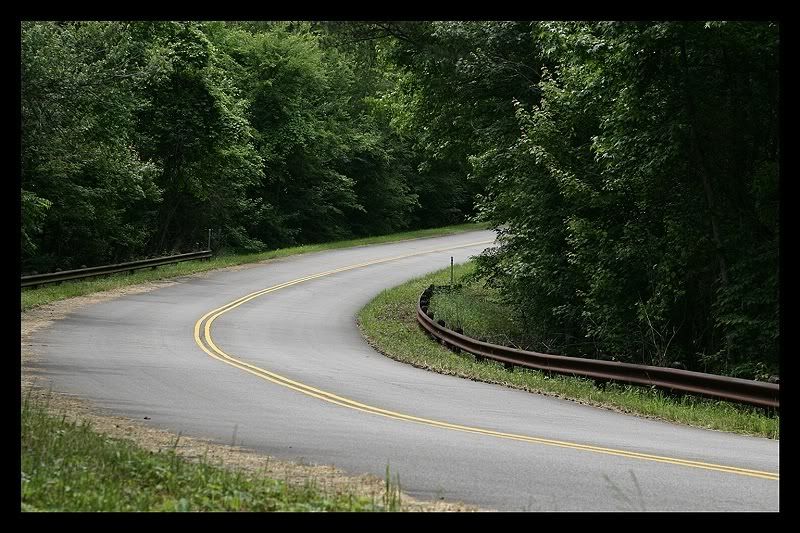
Life is a long giant lesson book. No matter where you go, or when, every journey and adventure offers lessons to learn from. When we stop learning, we might as well be dead. And in some cases, those who don’t learn may find themselves in that state, or staring it in the face.
In all situations the law of probability rules: form conclusions about the likelihood of potential events and the underlying factors of complex systems. Given a set of circumstances, these are the possible outcomes and risks, and this is how I reduce the risks but reap the reward.
And remember: everything in life is a trade-off.
Only these qualities will enable evolution into a competent rider. A warrior never runs into battle without study and knowledge of his enemy and associated circumstances. Nor does the warrior befriend strangers without the same evaluation. Based on such information, only then can the warrior weigh the consequences, make decisions and challenge himself and others. Riding a bike on winding roller coaster roads is no different. They are not to conquer, but to learn from and master; a synchronization of your body, mental state, bike and road surface.
Like playing an instrument in a symphony with other instruments. Each becomes fine tuned to the other, eventually becoming one: the symphony.
Let the ride begin.
"There is nobody to conquer, but oneself." - Zen proverbPhoto courtesy of Billy Downey
Labels: Adventures, Arkansas, essays
What we 'see' filters through two processes. [1] One is objective accumulation of data and 'unthinking' processing of said data. Our vision detects a cactus and our brain automatically interprets: thorns, ouch, stay away. This process and sometimes the final interpretation is often subconscious; you don't even think about thinking it. Our lizard brain is imprinted with such responses for self-preservation. And we often react accordingly: cactus = thorns = ouch = move away.
Phenomenologist Merleau-Ponty wrote: "In so far as I have hands, feet; a body, I sustain around me intentions which are not dependent on my decisions and which affect my surroundings in a way that I do not choose.” [2] What is in the world is 'there', but our responses to that world, and hence, our 'being' in that world is more complex.
The other process is perception. Now, 'perception' is acquiring, interpreting, selecting and organizing information detected by our senses; sight, smell, sounds, touch, taste..... The first process is the input of raw data of the world around us in a specific point in time. Perception is, well, processing all of that data and 'being' in the world.
This is what differentiates us from each other. And from other animals. Our perceptions 'color our world', our reality, more than other animals because we have the ability to reason and think about thinking. That each piece of data may be perceived differently than the person next to you is what makes us individual. It is what splashes the variety of colors, shades and shapes on each of our world and reality. And being in that world as a thinking body that senses its surroundings.
It is what makes us, 'me'.
My eight days in the desert were like a graduate course in perception. If I stood in one place long enough, more data entered my mind and it altered everything I 'saw'. Everything was, and is, all there whether I see it or not. But I can't really 'see' it unless I lasso time and slow it down, enough for me to absorb all that data. And process it. It becomes more than just 'the desert'. It becomes a whole new world in and of itself.
And I, less of a bystander and more a part of it.
What is it I see? How do I perceive it?
In two ways: as a scientist and as a giant sensory receptor. I perceive how the earth under and around me has changed over thousands of years based on what I see before me now and what I know about the geological history. I see how plants and animals have evolved to survive here, and the adaptive mechanisms that have permitted that evolution. I know why colors look differently under cloudy skies versus blaring sunlight, and why the sky is so much bluer here than what it appears to be in the metropolitan areas. My perceptions are influenced by my knowledge of what I sense, and changes the more I see.
Yet, I stand in awe at the varying sizes, shapes and colors of thorns that adorn nearly all the vegetation; the shadows as they slither across the land, formed by landforms or clouds; the deceiving closeness of all the mountains in the far distance; how precisely lizards match the colors of the earth under them and the vegetation around them; the contrasts of shapes and colors of the smallest details in the vegetation; the rapid changes in colors and types of rock within a few feet; the sweet smell of a bush in flower and the bitter scent of a rotting carcass next to it; vertigo battling inside with almost an erotic pleasure when standing on the rim of a canyon and straining to see the details of its bottom; delighting in a brief mist in the middle of a parched land and life; enjoying the different shades of colors under a gray sky, those shades that are elusive under a glaring sun.
Like a giant receptor, I stand without time and see all of these things before me. A new appreciation grows and takes solid form inside my mind, and all the data and perceptions are filed away for future recollection and musing. The data take new forms: memories and feelings. The lizard brain is coupled with the amygdala in processing, knowledge of what I saw and memories of emotional reactions.
And now, later, all is mulled over by the cerebrum: that part of the brain which enables us to think about thinking.
Ah, but then there is the camera, a tool that extends the mind's eye and attempts to capture not only that raw data, but also how it is perceived. And the challenge of applying language to record and convey my 'being' in that world during those points in time, and even now.
That is truly the challenge. For not everyone shares the same perception. Not everyone is receptive. And that, I believe, is the key. One must be receptive in order to perceive.
Next to the last day in the desert, I awoke to gray skies. While some may perceive that as a negative, I knew that the different light conditions would allow me to see the desert differently.
Along with my travel mug of coffee, the camera and I went for a walk in the desert. Zeke accompanied me part of the way, but he lost his patience with me when I didn't play.
The low and diffused light conditions allowed the colors, and hence the shapes and textures, to beam on their own. They weren't washed out by the strong and sometimes merciless harsh light of the sun and blue sky. It was as if they came out to play while the big bully was hidden away.
And I saw many things differently.
Note: the following text narrates the tabblo: A Mind's Eye.
The difference in shapes, colors and textures of plants side-by-side.
The softness and roundness of a bird's nest in a tree covered with angular thorns.
Arroyos beckon like the Yellow Brick Road.
Long, slim and dark green leaves behind round and smooth ears of cacti.
Stark nakedness of a tree against the gray sky and amidst its low growing neighbors.
A a stalk of yucca flowers stands like a beacon of light in the middle of the desert.
The chaos of details on the ground before you compared to serene smoothness of the background hills.
How shapes and colors of plants can be just as contrasting and varied as the rocks they live amongst.
Ah, juxtapositions: look at how both can have the same elements, yet opposite each other. The sharp angular thorns on the round cactus, and the round leaves on the angular branching shrub behind it.
My ultimately favorite perspective of this cactus, layers of contrasts: long sharp thorns springing out of angular sections of a round stalk, all forming a perfectly round clump of opposites.
It looks deceptively soft and furry.
And, yes; the giants. I am a creature of fog, like the Hound of the Baskervilles. The mystique and eeriness coupled with an underlying anticipation and eagerness. How the clouds and fog play hide and seek with the mountains and the sun! And it changes every minute.
I walked around aimlessly for several hours that morning like a child in a magical garden. The further I walked and took in all that surrounded me, the more intimate I became with the desert world. After awhile I found a ledge and sat to settle myself from the sensory overload and feeling a deep peace settle in. And a comforting solitude.
I felt like I was home.
[1] The science and philosophy of perception has been a life-long interest of mine. How they relate to 'reality' is a common theme both here in this blog and in my other blog (more scientifically oriented).
[2] Maurice Merleau-Ponty was a French phenomenologist and philosopher that proposed a non-philosophical, if you will, approach to the embodied experience; one that transcends the commonly accepted Western dualism of empiricism and intellectualism (or knowledge).
A similar theme appears in Robert Persig's book, Zen and the Art of Motorcycle Maintenance.
Labels: essays, meanderings, slideshow
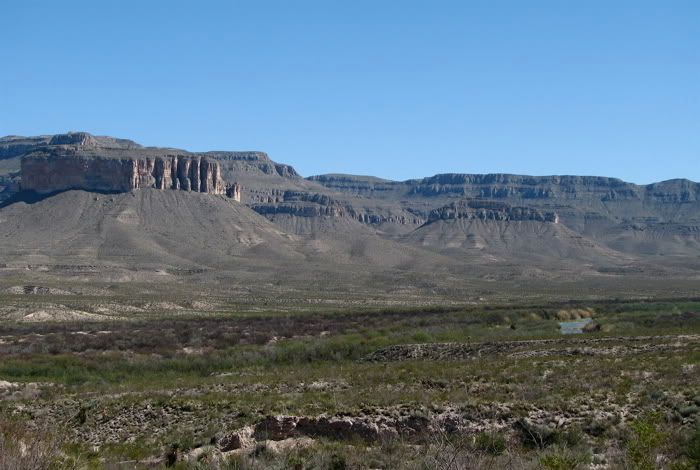
I'm a creature of my surroundings. Ever since I can remember my environment has been a part of me, no matter where I am. And that has not always been a positive impact.
In the Maine woods I was nearly as much a natural inhabitant as the many life forms I shared it with. On the ranch in Oregon I shared pastures with the sheep for a spring noon-time nap while watching young red-tailed hawks squawk and flop from branch to branch, their mothers taunted them from nearby trees. And felt the caress of the Pacific coast fog on my body and spirit along with the peaks of the Coastal mountains as it slithered over the tops from their western slopes.
In California the ravaged land disturbed my spirit for months before I realized why: its silent wail of overuse and abuse never left me alone and haunted me. Areas of the the Northeast and Central US seemed complacently old and weary; the old but still vigorous and wild mountains and forests of Maine and New Hampshire were pleasurable. Ohio and West Virginia are suspended in time, an indecisive staggering of going forward or backwards.
Centuries of natural and human trials and conflict, against each other and amongst themselves, echoed in the canyons of the Dakota Badlands. There, my portal into the world of the West was my final step from my Eastern past. And without a look behind me, I stepped into the West. For I felt I was finally 'home'.
Barney Nelson writes about a 'sense of place'; accumulative and subconscious, possibly a 'sixth sense'. [1] Anyone living or has lived in a place where they sense the changing weather by a shifts in the wind or a scent on the air, intuitively find resources to survive off the land, look down at their feet and 'read' foot prints and animal scat, look up into the trees and predict drought or bountiful rain, find water in the desert by spotting cottonwoods, detect 'stale' or clean water by smell or a drop on the tip of the tongue, anticipate seasonal cycles by observing the changing fur color of rabbits and mink ......... you know that 'sense of place'.
As Nelson aptly comments, that sense comes with adaptation and surviving in a particular place. It may derive from observation of the surrounding life, flora and fauna, from trial and error. Consequences always follow decisions, and choices may be few. You learn quickly from negative consequences.
But it's more than just a sense of place, it's also a sense of time. Not only do we build upon past experiences, positive and negative reinforcement, but also knowledge of time that you 'read' in the land. Seashells on the tops of mountains indicate the land underneath your feet were once buried under massive seas and teeming with aquatic life. Fossils of plants and animals that once flourished on the same ground you walk possibly enjoyed conditions contrary to what you see and feel around you now. Mountain ridges were once buried deep below the earth surface only to be thrust upward and out by movements in the earth's crust as continents ripped apart. The magnificent red-hued arches and canyons were once solid rock, worn and sculpted over time by water. And you wonder where that water came from while standing in a blistering hot and dry desert.
Sometimes you wonder what the land looked like before concrete and asphalt ribbons cut it into strips and pieces, now jotted with concrete and wooden boxes we call 'home'. And wonder what it will all look like a decade, a century, or a thousand years from now.
Place and time go hand-in-hand like lovers in bed. They are coupled for eternity, or only a moment in their time, which equals thousands of years in our time.
To me the deserts and its canyons are the harbingers, the epiphany, the representatives of this sense. It's almost unfathomable, incomprehensible and sometimes overwhelming. The time over which these magical places formed extend the gamut of expansive seas vibrant with life, even in the smallest scale, then evolved either dramatically or slowly, sometimes both, to it's present state. They are the yin and yang of the environment.
Contrary to many people's perception of the desert as being empty, barren and lifeless, it teems with life. But it has different rules than what we are used to. The only real rule is adapt and survive. It's very simple, really. If you are attentive and observant, you will see how all the other creatures survive. And you learn from them. Survive, perish or go home.
Yes, the desert can be harsh and unforgiving. But it is also a place of beauty, peace and power.
Albeit words and photographs are always inadequate compared to the reality, I hope these posts impart a small measure of what the desert is.
[1] Nelson, Barney, ed. "A Big Bend Sense of Place" in God's Country or Devil's Playground (Austin, Texas: University of Texas Press, 2002).
Photo taken in Black Gap Wildlife Refuge, Texas.
"In indigenous, oral cultures, nature itself is articulate; it speaks."
- David Abram, The Spell of the Sensuous. 1996
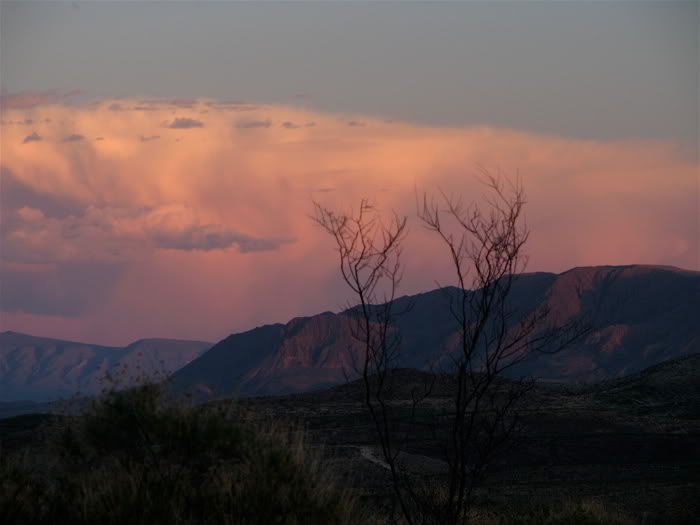
Arriving as a fresh virgin canvas, I try to remain innocent of new places I travel to. First impressions are sometimes the richest and untainted by expectations. Like stepping into the unknown, you might be treated to all the multiple layers that comprise your surroundings; the sounds, colors, shapes, tastes. The fears, surprises, the thrills and all the unexpected. Like an astronaut flying into the unknown of space having a vague idea of what is there, but no real comprehension or grasp of the reality until you are there. In the midst of it all and an integral part of it.
Many people travel to places with preconceived notions and expectations that alter their reception and perception of what surrounds them. Sometimes blinding them to the subtleties and nuances, they see and experience only what they believe to see based on what they expected. And thus miss the true character and reality of what is genuinely there.
I discovered this myself last September when visiting Taos for the first time. Taos in my mind was forged over decades since I was very young, reading books and stories, gazing at pictures of a Taos that probably existed long ago or colored by others' perceptions. But we all know, despite that some people don't want to admit, places change. Just as we do and just like the seasons. People naturally don't want to let go of where they lived and their experiences during time points in their lives, read about in books, or have watched in the movies.
But Time waits for no one.
My first impression of Taos was disappointing because it was not what I had expected or imagined it to be. Taos, like many other places of natural wonder, had succumbed to the same progression of all other wonderful places with the growing impact of human habitation. As much as Steinbeck and Abbey deplored those changes, it is the inevitable course of human nature. And it will continue just as it has over eons of human encroachment over the surface of this planet. As Joni Mitchell sang "We paved Paradise and put up a parking lot."
Do we lament the passing of the idyllic, or is there a balance? Does some of the enchantment survive? Some of the original character still remain?
Of course it does. But you might have to take the time to dig under the superficial layers to those that reveal themselves to you. I did just that when I visited Taos on my return trip and discovered some of that upon which the legends of Taos were built.
Before visiting the Big Bend country, I purposely resisted reading books about the area. I did however peruse topographical maps to at least become familiar with some of the natural and physical landmarks. All of the stories and most of the photos related and shared by bike riders were mostly relegated to roads, roadsides, commercial entities and the outlying towns. They aren't intimate with the desert, nor do they reveal its true nature.
For the desert country itself, I was a naive canvas upon which its colors and smells were splashed on me. My immediate response was an awakening of the memories and experiences from visiting the Arizona deserts many decades ago. I recognized the smells, the air and some of the vegetation.
But the Big Empty is unique in many ways. And my time there was mostly intimate with only a portion of what it is.
It spoke to me. And I still hear it's voice.
There, Time waits for no one. Nor does the desert itself.
It is what it is.
But it wasn't enough. Like a child after her first taste of honey or maple syrup, I want more. I want it all.
I have likened it to the agonizing drive of a character in the short story by Harlan Ellison, "I have no mouth and I must scream."[1] In the story Ted, the sole surviving human in a reality perpetuated by a machine, is turned into a formless mass but still retains consciousness as a human being. The machine alters his perception of time so that Ted is eternally anguished. Ted wants to scream out his pain but he can't because his new form lacks a mouth.
Some of you may have felt that drive before. Not just anguish and pain, but love, joy and wonderment. It's irresistible. Many writers write because we have to. Like the wolf howling at night, the geese flying south for the winter, a moth drawn to the light. The hole in the dam from which water escapes, a deafened Beethoven's musical composition.
Writing is our outlet. It is our mouth when we must scream.
As I have tried to explain to a few individuals, writing is a passion. It's a part of you, like your foot, hand or ear. It's like taking a breath and exhaling. But you must have passion in order to write with passion. You have to let yourself feel that passion in order to write about it.
One of my favorite authors, Edward Abbey, describes it eloquently:
That about sums up my literary career. Which is not and never has been a career anyway, but rather a passion. A passion! Fueled in equal parts by anger and love. How can you feel one without the other? Each implies the other. A writer without passion is like a body without a soul. Or even more grotesque, like a soul without a body. [2]I meet too many people who bury or deny their passion. And they can't write, sing or play music. Some can't even love or cry.
They can't scream.
[1] A review of Ellison's collection of short stories in I Have No Mouth and I Must Scream. The story won a Hugo Award in 1968 and was censored in many towns.
[2] Abbey's introduction to his own collection of writing, The Best of Edward Abbey.
I've noticed some of the differences between myself, a female biker, and other women around me after a biotech sales rep teased me about my life and appearance as a 'biker'. While standing talking to the sales reps in the cafeteria, one foot was on a chair and my elbow rested on my knee while leaning forward and gesturing with the other hand to illustrate a riding story from my recent trip. It was a relaxing posture that I assume often. I never gave it any thought until then.
On the train home later that same day, I observed the pointy-pointy little shoes that women cram their feet into, reminding me of Asian bound 'lily' feet and jester's pointy curly shoes. I wondered if those pointy-toed shoes should be registered as lethal weapons. Nor can I imagine them being comfortable. I looked down at my sport bike boots, the gray dirt and shiny spot where the left foot coaxes the shifting lever, and the two patches over the outer toes in case I lean over too far on a wild curve.
I looked at the clothes adorning the women around me; the frilly sheer blouses, colorful plush coats, short and long fitted or pleated skirts, jeans without waists that ride low on cushy hips.
Then looked at my own bright yellow and black riding jacket with armor spaced and placed resembling an armadillo, the long-sleeved shirt and collared zip fleece jacket underneath and over my UnderArmors, and lined armored over pants that remind me of a snowmobile suit.
Then I noticed other differences:
I read Bike or New Scientist magazines on the train. They read People, Good Housekeeping and Christian magazines or romance pocketbooks.
My hair is sometimes wild and all over the place from being underneath a helmet. Their's is coiffed, barretted or sprayed in place.
I chat about bikes, hikes, riding routes, topography, exciting places we've been, camping and riding gear. Or psychology, philosophy, science and current state of affairs. They chat incessantly about kids, laundry, clothes, their boyfriend/husbands, nail polish, house 'dressing', cooking and things I have no interest in.
But remembering the long silk black backless dress and black heels in my closet, the luxurious jacuzzi hot soaks by candlelight, using cloth napkins at the dinner table for guests, and the soft whispering kisses I give my lover when he visits.........
Yup, I'm still a female, but I am also a biker.
I'm quite at home being both.
Labels: essays
Each visit to the canyons presents a new perspective: the landscape, weather, topography, vegetation, animals, history; the colors, smells, sounds and different flavors of life and death. The expanses and vistas have their own magic, the canyon floors their own world, the weather so elemental that you can't help but be awed by the forces that make it unique and powerful.
Canyons are where you find life and death and the gradual march of geological history. If you look closely, you might find traces of our own history as humans living, struggling and dying in these lands. Many saw and believed what they wanted to see or believe, many died trying not to see. These lands have no mercy.
For once, all the knowledge you accumulated as being useful on a daily basis means nothing there. The only knowledge is respect and resourcefulness. With a dose of courage. You're tested on what it means to be alive. If you fail, you risk dying.
Maybe that's part of the thrill. Maybe it the rawness, the dichotomy of beauty and danger as strange bedfellows. Regardless, for those visitors, those pilgrims that are willing and brave to open themselves up to this landscape, you might find just who and what you really are. You may be afraid of yourself, but you can't hide from yourself there.
If you do, you may cease to exist.
To experience that you have to shrug off your protective coat of civilization, shed your expectations and preconceptions. Let the canyons swallow you and it will provide you with a new robe of courage, strength and respect. You will leave as a new person, empty yet whole.
You will remember what it is like to be human.
Big Bend is calling me, whispering to me every day. I can't refuse it.
Labels: essays
It’s that longing to be in the sky when you gaze at the stars at night. To sail amongst the stars and planets, see them for what they really are in their own orbits; their immense size that we can only imagine, the absolute lack of environment that we take for granted on our own planet. To see all the celestial bodies that are the blanket of stars that we call the Milky Way in the midnight sky.
It’s the longing for someone you love with a realization that you will never share their nights watching them sleep, smile as they waken, hold them close to you and feel their warmth, share daily conversations or their pain and joy.
It’s the yearning to be free from conscription to a job that leaves you little time to live a fulfilling life. To be free from herding down the sidewalks and halls like cows to slaughter.
“Why do we do this every day?”, I asked on the train the other morning.
“Um, to have stuff,” was the answer.
We all tolerate stress, long hours and insolence to “have stuff” and we’re happy? If so, why doesn’t anyone smile and mean it?
It’s that longing to ride to the canyon floor and never have to leave. Ride through the mountains and never have to turn around. Set the sails and pull the anchor without having to ever moor again. Share the adventure of a lifetime with someone equally enthralled as you are.
It’s the longing to leave it all behind and never have to worry about a meal or having a warm bag to sleep in.
It’s the desire of sharing your life with someone you know you never can.
It’s the pull of going to places you know you never will; heading out on the road and never having to go back.
It’s something that tugs at your heart, grips your stomach and tightens your chest. It’s the longing to be ‘whole’, to be ‘complete’, to fill an emptiness that clouds you sometimes when you contemplate it, or when you least expect it.
It's something money can't buy.
You can deny that longing, that desire, that yearning all you want, but it’s still there. It lurks in the back of your day and haunts you in your dreams at night. It’s a ghost on the fringes of your perceptions.
It’s a part of you. You can’t deny it; it won’t go away. You can try to run from it, hide from it, bury it, smother it, excuse it, berate yourself for it.
But it’s a part of you. And it won’t go away.
But that’s okay.
It’s what makes us human.
Labels: essays

In my mind, there are three classes of bikers:
Weekend Warriors. We know who these are. They ride their bike for a trip into town or to the bar on the weekend or ride it every blue moon and put it to rest in the garage collecting cobwebs. We all know the type and they know who they are. This group also includes the Wheelie Squids. It is, after all, all about the ego.
The Fast and Furious. Many of the riders I see and meet fall somewhere into or closely on the edges of this category. The ride means only one thing to them: fast, furious, Point A to Point B. Don't get in their way. They live for the adrenaline rush of the ride on the fast and winding road. It doesn't matter where they are, what they pass......the blinders are on, baby. Just give me the speed and whine of the engine under me.
The Vagabond. A traveler, pilgrim, hobo, seeker......... Someone who loves to move and a bike is his or her vehicle on the path. Some of us also enjoy the fast and furious. But what sets us apart from the others is our attentiveness to what and where we ride through. We may not even have a destination in mind, but our spiritual compass signals us "Go this way." Or we may take a sudden turn as if drawn to a magnet.
We may stop for a moment or days when we see something that is worthy of our reverence, something that invokes awe and wonder in our hearts. When contemplated, they may completely transform us. It's not so much the ride as it is the experience of everything around us as we travel. It is opening ourselves to the deeply real that lurks everywhere beneath centuries of stereotypes and false images that prevent us from truly seeing other places, people and other times.
The journey is returning to the source that replenishes the soul. On a bike, it is a continual process that can not be duplicated except for on foot or on the back of a horse. We are exposed to everything around us. Our bikes are more than just machines; they are our souls on two wheels.
Below is a quote from Ara's blog while he rode through the Chiricahua Mountains in southeast Arizona:
I guess that is one of the aspect I like about my life right now. Almost a daily change in my surrounding, in the weather patterns, and even from State to State I have to confess a different almost Civilization... I can tell... There is not much comfort in our daily life, not physical anyhow. It is not uncomfortable either, we move... never quite standing still. The comfort is in the mind, the comfort throughout the days, now that we have fallen into following the path of this Journey. As someone write to me the other day, which I felt was very profound “I am at Home in my own Soul” I truly am...Lao Tzu wrote, "The longest journey begins with a single step."
For us bikers, the journey begins with a roll of the throttle.


Such was the response from a colleague when he asked what I was planning for the weekend. I told him I was planning a long ride, rain or shine, hot or cold, with no real destination in mind.
How does a rider explain the long hours in the saddle, enduring cold, heat, rain, discomfort.....? They don't understand.
It's not just a mode of transportation. It's not just moving from here to there. It is the ride; the journey.
There's a kind of solace, independence, a statement of intent and free will in the ride. It's taking flight, riding the road like coasting on thermals high in the air. Gliding through the spaces of life that no one else seems to see or experience.
For some, the ride is an escape from life; for others, like me, it is a re-discovery of life, and of self. It is an inimate union with everything that surrounds you and a vehicle traveling through a reality that is your own.
It's not just the speed, not just the road. It is more a way of life and expression.
When we are not walking on two feet, we ride on two wheels.
Because that is what we are.
Labels: essays

Riding home tonight after dinner with other bikers (including five V-stroms) the full moon cast a glow on the road with shadows dancing on the side as I rode. Although it was 33 degrees F, the electric vest kept me warm and comfortable. My fingers in their new gloves didn't protest until half a mile from home. When the heated grips are installed, all will be well.
If I could have kept my fingers warm, I would have taken a longer ride home. Ribbons of clouds played hide and seek with the moon, but it was a losing battle; the moon won. The clear crisp air drew to the surface memories of the cold crisp winters in Maine with full moonlight twinkling off the snow on the ground and trees. At times it was so bright, the day and night were almost inseparable. I would sometimes stand outside in the silence of the night and snow to gaze at the moon and the dancing shadows around me. Or bundle up with ice skates dangling around my neck by their shoelaces to skate the frozen lakes, the moon reflected on the ice which crunched under my skate blades as I sped along on it surface like air.
I smiled in my helmet at these memories, glad that they were there but also glad the snow was not here.
I stood for awhile after dismounting from the bike, turning around gazing at the sky and the moon. The now bare cottonwoods by the pond cast long shadows on the brown grass. Twinkling stars played peek-a-boo with the whisps of clouds. The air was crisp and dry, I was warm and happy.
I covered Whee after removing the sheepskin pad from the seat to bring inside and keep warm for the morning commute. The moon will still be in the sky as I ride to the station, and the sun will greet me when I pull into my parking spot, rising pink and blue in the eastern sky.
Another day, another night.
But the full moon smiles on me
these few precious nights of every month.
And every month I take it for a ride with me:
me, Whee, the moon and our shadows.
Labels: essays